Science has shown that meditation supports the formation of new neural pathways that rise beyond the addictive twin cycle of acceptance V rejection. In this, the pain of rejection (and the threat of acceptance) are both deeply relieved.
When someone rejects us, the brain registers it like a stab in the heart. The pain of rejection can be so overwhelming that we can move far uot of our natural impulses to avoid the feeling. The pain of rejection sets the system in a state of emergency, which activates the raw responses of fight, flight or freeze. When rejection stalks the ecosystem between us, someone has got to go, and the tendency is to let it fall to the “other”.
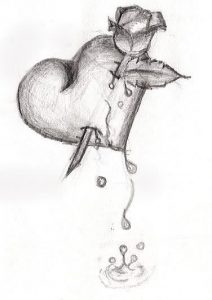 Long-term, unconscious strategies against the threat of rejection involves anticipation of possible threats, search and kill missions on possible attackers; and a degree of obsession with the warning signs imagined in the reactions of others. The threat of rejection can inflate egos structures in a moment, narrowing the horizons of perception and masking any vulnerability. Friends become arch enemies, colleagues become predators. In the rejection fields, it’s kill or be killed.
It’s all far removed from the easiness of relaxing into the welcoming presence of all we are. The fear can be so great that it gets dislocated in time and space, and takes on grandiose proportions in relation to contect. That is, we can spend hours in the comfort of our own beds in mental trepidation about the anticipated pain of rejection that might come tomorrow, or alternatively, that happened in the past.
Rejection is linked to trauma. Yet unlike a trauma, in which we break connection with an unwanted aspect of experience, in rejection between people, we are the rejected part of the whole. WE ARE THE TRAUMA.
The threat of rejection is a threat of expulsion from the tribe which in nature could mean death. All the four collective fears of traditional psychology are linked to rejection.
-
- The fear of death: in nature, when a herd excludes one animal, it will probably die alone.
-
- The fear of illness: illness is in nature is an underlying motive to reject one member of the herd – to isolate him or her, for the sake of the whole,
-
- The fear of insanity: collectively, we reject those considered ‘insane’, confining them out of sight, as if mental disorder were contagious
- The fear of sexuality: rejection games between genders and over the whole gender issue, coupled with vast fields of rejection and projection around sexuality, makes sexuality a forerunner in the horrific rejection game.
In this sense, the fear of rejection would appear to be a meta-fear – more powerful and over-riding even than the threat of death. The pain of rejection goes with physical sensations – we literally seize up and contract around the wounding, as an emergency containment measure. It has mental sensation – releasing stress hormones that over-activate the control centers and vastly inhibit the firing of mirror neurons – so-called ’empathy neurons’. Emotionally, the pain of rejection can feel like a hemorrhage of despair – we are literally bleeding out from the center of the chest.
The fear of rejection leads us to reject ourselves so that we at least retain a remnant of control. We reject our true feelings; we repress our voice; we adjust attitudes to conform; and rearrange our faces to please society. Life becomes a game of survival and isolation – but no-one ever fired a bullet.
Acceptance can antidote rejection, but also feeds the belief because what can be accepted today, can get rejected tomorrow.
The Opioid Swing in the Brain
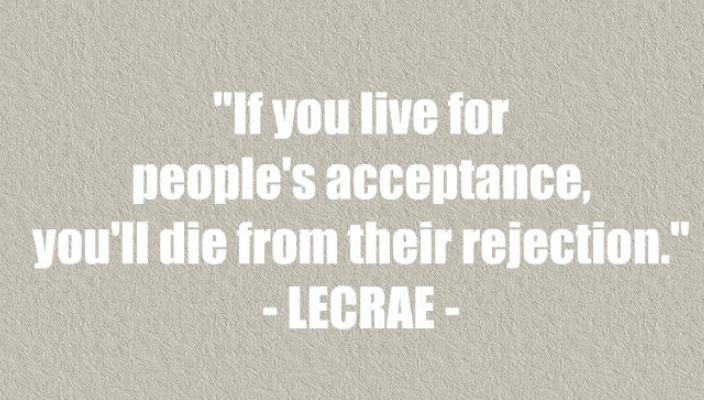
 For a while, we can compensate the pain of rejection with the production of opioids. Scientists are even pondering manufacturing a medication to stimulate them for sufferers of depression and anxiety disorder. Yet this risks keeping us dependent on circumstance – addicted even, to the rush of feeling appreciated. We need ever increasing quantities of the reward chemical from the outside world – literally to numb the pain. This can be a person we admire, or a source of reward in which we seem to receive public applause and appreciation. Yet the opioid source itself does not take away the pain, it simply kills its registration in the brain like an aspirin – temporarily. Physically seen, the knife is still in the chest!
“It is always the false that makes you suffer, the false desires and fears, the false values and ideas, the false relationships between people. Abandon the false and you are free of pain; truth makes happy, truth liberates.”
― Nisargadatta Maharaj